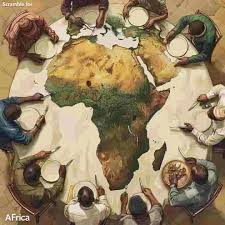
This course provides a foundational and comprehensive introduction to the major themes, debates, and methodological approaches in African history from earliest human evolution to the eve of the 1884–1885 Berlin Conference. The course examines Africa not as a continent with external actors, but as a historical agent with autonomous developments, complex civilizations, and dynamic socio-political systems.
It emphasizes Africa’s deep antiquity, indigenous knowledge systems, patterns of migration and state formation, economic transformations, cultural exchanges, and the region’s long-term interactions with the wider world. Students will explore diverse primary and secondary sources such as oral traditions, archaeological evidence, linguistic reconstructions, written chronicles, travelers' accounts, and material culture. This will enable them to gain methodological grounding in reconstructing African histories prior to extensive colonial documentation. The course interrogates historiographical debates on Afrocentrism, diffusionism, environmental determinism, and the politics of representation in precolonial African studies.
Key topics include Early man in Africa; Development of the Neolithic and iron technologies; The rise and fall of
Early civilizations – Egypt, Meroe, Axum, Emergence and spread of the Bantu, Cushites, Nilotes; Development of trade contacts with the outside world; the coming of Islam and Christianity; Development of Political Systems, a cephalous and centralized state systems.
By the end of the course, students will have a nuanced and historically grounded understanding of Africa’s internal dynamics and external linkages up to 1884, preparing them for advanced studies in African history, political development, and cultural studies.
- Teacher: Allan Chore